
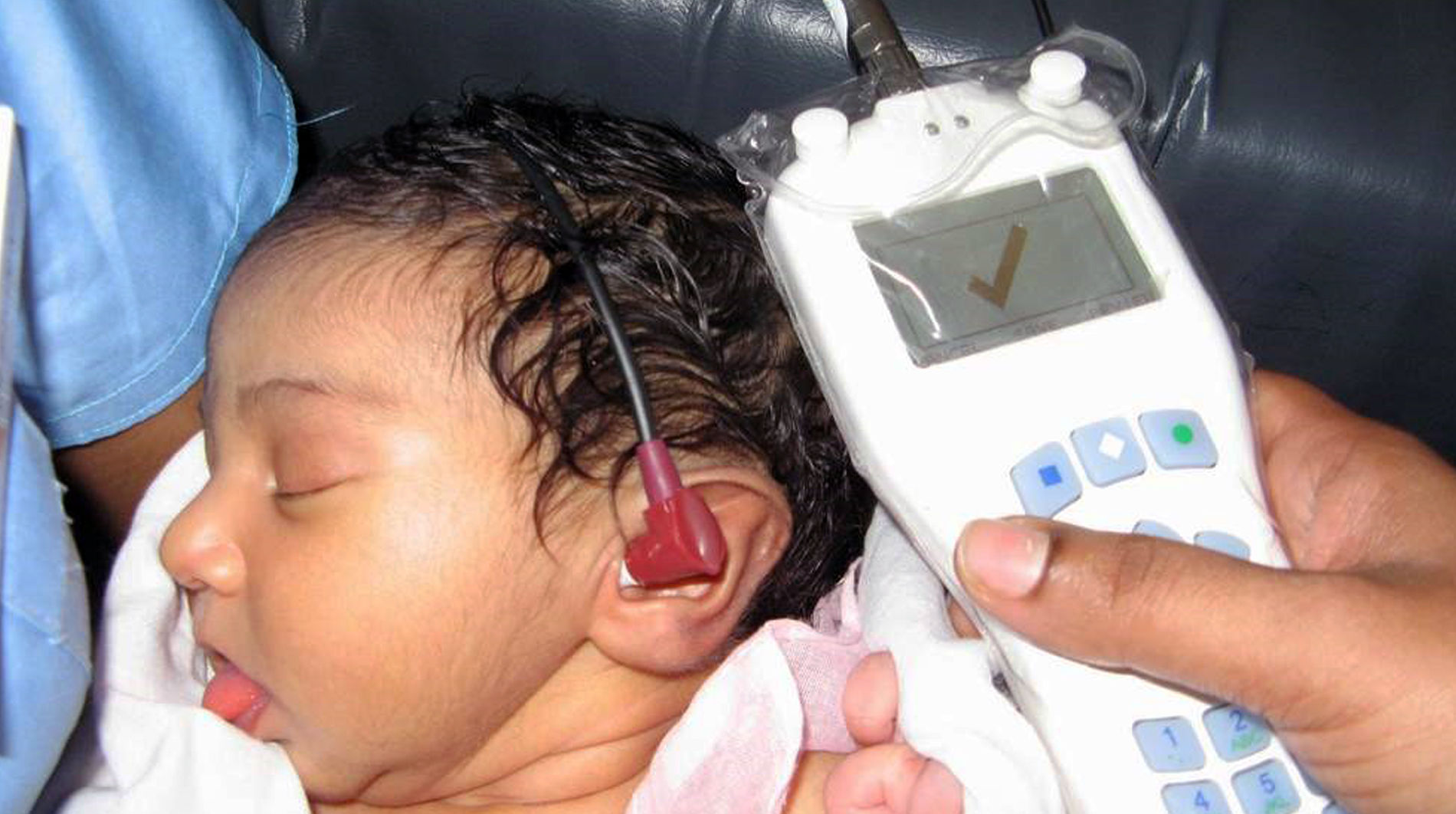
OAE Hearing Test
Otoacoustic emission
Types of otoacoustic emissions.
An Otoacoustic emission or OAE is a sound which is generated from within the inner ear. It’s a low-level sound emitted by the cochlea either spontaneously or evoked by an auditory stimulus and it specifically provide information related to the function of the outer hair cells also known as OHC. Broadly speaking, there are two types of otoacoustic emissions. One it is known as Spontaneous Otoacoustic Emissions or say SOAEs, which can occur without external stimulation, and Another is known as Evoked Otoacoustic Emissions or say EOAEs, which require an evoking stimulus.
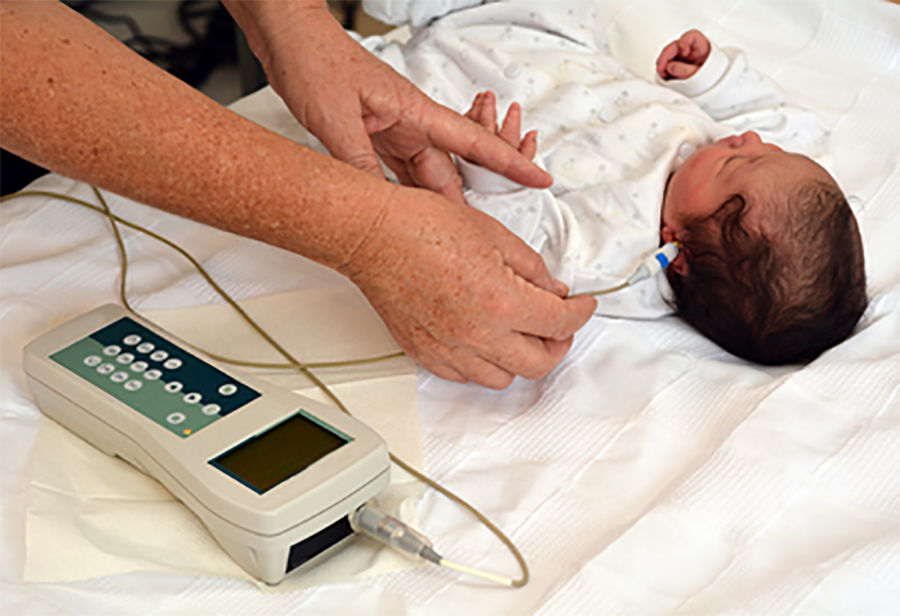
Otoacoustic Emissions (OAEs)
Otoacoustic Emissions (OAEs) are sounds given off by the inner ear when the cochlea is stimulated by a sound. When sound stimulates the cochlea the outer hair cells vibrate. The vibration produces a nearly inaudible sound back into the middle ear. The sound can be measured with a small probe inserted into the ear canal
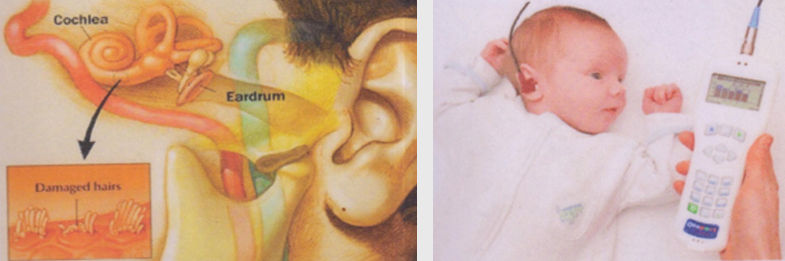
Why Do We Take an OAE Ear Test?
Manual diagnosis of hearing impairments in neonates is not feasible for doctors. As a result, medical professionals will use the Oto Acoustic Emission (OAE) test kit to evaluate the baby’s hearing. When a child grows older, hearing impairments can cause cognitive, emotional, social, and speech and language issues.
In general, the development of a baby’s hearing and speaking abilities is most important during the first six months of life. As soon as the infant is delivered, but no later than one month after delivery, hearing loss can be identified. The doctor will utilize the detection results as diagnostic material for a follow-up test when the baby is three months old.
OAE Hearing Test Procedure
Only experienced hearing healthcare professionals perform the Oto Acoustic Emission (OAE) test. During this examination, the specialist will place a soft-tipped probe into the ear opening. The infant would then be exposed to a click sound to see how the stimulation of the outer fur of the inner ear affected him or her. The OAE machine will record the response, and the testing physician will review the results to determine whether hearing loss is present. The Oto Acoustic Emission (OAE) test procedure is quick and painless. When the baby is quiet, the procedure typically takes 20 to 30 seconds. However, the test may take longer than five minutes if the baby moves a lot.
If needed, newborns may be subjected to an Oto Acoustic Emission (OAE) hearing test at the Asha Speech and Hearing clinic. We have a large team of medical experts and cutting-edge technology to provide the best speech and hearing healthcare services in New Delhi for more than a decade. Book an appointment with us to consult an expert about your child’s hearing problems. We are happy to assist and are entirely committed to the long-term growth of the children.
Frequently Asked Questions
How long does an OAE screening take?
About 5–7minutes per ear. You just sit back while a tiny probe emits sounds and records your cochlea’s outer hair cells “echo” responses.
Can OAE testing be done on a restless toddler?
We create a calm, child-friendly space and use engaging toys to keep little ones still—most screenings succeed even with mild movement.
What do OAE results mean?
A clear echo means your inner ear is functioning normally; absent echoes may prompt further testing like PTA or BERA.
What is the suitable age for doing OAE Test ?
OAE is the basic hearing screening test and can be done even on a new born - after 24 hrs of birth .
Do I need to prepare?
No fasting or paperwork beyond basic check-in.
Is OAE covered by insurance?
Many plans do cover newborn and pediatric screenings.
How soon can I book after noticing hearing issues?
Call us anytime—most slots are within a week, ensuring prompt evaluation and peace of mind.